
As Spring planting approaches, farmers across the U.S. are entering one of the most important planning windows of the year. While fieldwork may still be weeks away, the conditions shaping the upcoming season are already in motion.
Warmer soil temperatures, compressed planting windows, and increasingly unpredictable weather patterns are driving earlier weed emergence across many regions. When weeds gain an early advantage, they compete aggressively with young crops for moisture, nutrients, and sunlight—often before crops have the opportunity to fully establish.
The result is a familiar but growing challenge: act early, or risk yield loss that cannot be fully recovered later in the season.
The Rising Pressure on Spring Weed Control
Early-season weed pressure is becoming more difficult to manage as multiple factors converge:
- Herbicide-resistant weeds continue to expand across key row-crop regions
- Input costs are rising, putting pressure on per-acre profitability
- Additional spray passes increase fuel use, labor, and operational complexity
When early weed pressure erodes crop performance, the impact extends beyond the field—affecting production costs, efficiency, and ultimately the economics of the entire growing season.
For many growers, this is shifting the focus from reactive weed control to proactive planning before the season begins.
Using Field Structure to Your Advantage
In row-crop production, field layout plays an important role in how weed control is applied. With crops planted in consistent rows—such as potatoes, lettuce, beets, peanuts, tomatoes, and broccoli—growers have the ability to navigate equipment with precision through the field.
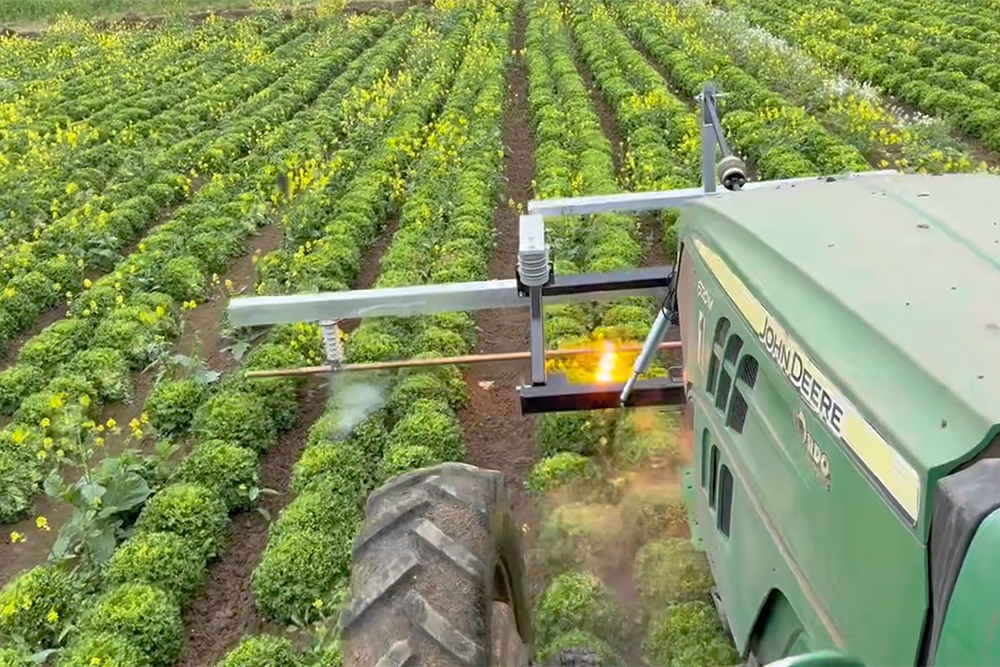
Technologies such as LASCO’s Lightning Weeder™ are built to take advantage of this structure. By focusing on direct contact and controlled application, the system allows growers to address weeds in key areas of the field—such as between rows or above the crop—while maintaining normal field operations.
This approach enables more targeted weed control without disrupting the crop, aligning with the need for efficiency during tight Spring planting windows.
A Tool Designed for Real-World Conditions
As Spring fieldwork accelerates, growers need solutions that fit within existing operations—not ones that add complexity.
The Lightning Weeder™ is designed to integrate with standard tractors in the 50–250 horsepower range, allowing farmers to treat weeds during normal passes across the field. This compatibility makes it possible to address early weed pressure without disrupting established workflows during one of the busiest times of the year.
At the same time, the system’s Electric Discharge technology delivers controlled electrical energy through the plant, disrupting weed tissue from root to shoot while leaving surrounding soil structure intact. This targeted approach minimizes unnecessary inputs and helps preserve the biological health of the soil.
Strengthening, Not Replacing, Existing Programs
Electric weed control is not intended to replace traditional weed management strategies. Instead, it is increasingly being used as a complementary tool within integrated weed management programs.
For growers, this can mean:
- Reducing reliance on herbicides where resistance is a concern
- Limiting the number of chemical applications
- Adding flexibility in unpredictable field conditions
As herbicide performance becomes less consistent in some regions, having additional tools available is becoming an important part of maintaining both yield potential and cost control.
A Shift Already Underway
Across farming regions, electric weed control is gaining momentum. What was once considered experimental is now being evaluated as a practical, field-ready option—particularly in systems where herbicide resistance, regulatory pressure, and cost constraints are reshaping decision-making.
Farmers are increasingly prioritizing tools that:
- Deliver consistent results under real-world conditions
- Support soil health and long-term productivity
- Fit within tight Spring operating windows
Looking Ahead to the Season
The Spring season sets the trajectory for the entire year. When early weed pressure is managed effectively, it supports stronger crop establishment, more efficient field operations, and more predictable outcomes throughout the season.
January is the time to prepare for those outcomes.
With planting season approaching and weed pressure already emerging in many regions, having the right strategy—and the right tools—in place can make the difference between staying ahead of weeds or trying to catch up all season long.