
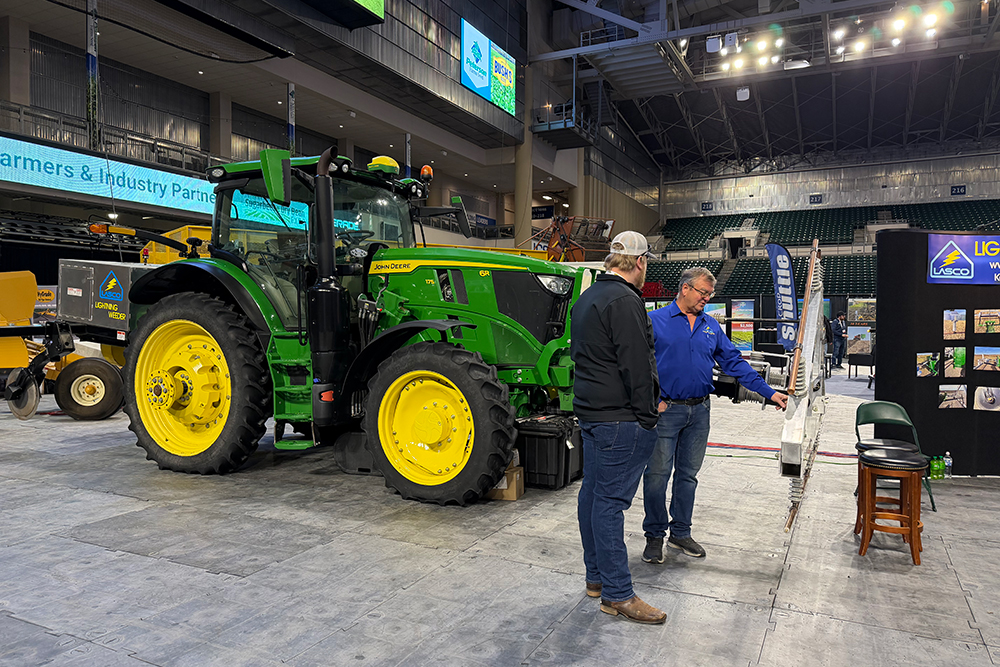
Farm shows give growers an opportunity to see new equipment, compare technologies and speak directly with the people who understand how those technologies perform in the field.
But evaluating a new weed-control system involves more than looking at the machine. The real question is whether the equipment can address the weeds creating problems on your farm and work within your existing operation.
As electric weed control gains attention, growers are asking practical questions about timing, crop compatibility, equipment requirements and field performance. Understanding these factors can help determine whether the technology belongs within a broader weed-management strategy.
Start With the Problem in Your Field
Every equipment decision should begin with the problem it is expected to solve.
Are weeds surviving a carefully planned herbicide program? Are late-season escapes interfering with harvest? Are mature weeds producing seed that may increase pressure in future seasons?
Identifying the weed species, growth stage and location within the field provides a useful starting point. Younger weeds are generally easier to control, while plant structure, moisture, conductivity and the amount of contact with the applicator can influence performance.
Knowing which weeds are causing the greatest difficulty helps growers have a more productive conversation with an equipment manufacturer or distributor.
Understand How Electric Weed Control Works
The Lightning Weeder® uses direct contact to deliver electrical energy through the target weed.
When the applicator bar contacts the plant, the electrical energy rapidly heats the moisture within the weed and damages plant tissue internally. The effect travels through the plant rather than simply burning the visible growth above the ground.
Because the system depends on contact, crop height and weed height are important considerations. For over-the-canopy applications, the target weeds must extend above the crop so the applicator can contact them without touching the crop itself.
This makes timing an important part of the strategy. Treating weeds before they fully mature may improve control while also helping reduce the number of plants that produce seed.
Consider How the Equipment Fits Your Operation
A technology may work well in principle, but it must also fit the realities of the farm.
Growers should discuss tractor and PTO requirements, mounting, hydraulics, row spacing, applicator width, field speed and operator training before making an equipment decision. Crop type, field layout and the timing of normal field operations should also be part of the conversation.
The objective is not simply to add another piece of equipment. It is to understand how electric weed control could be incorporated into the farm’s current workflow without creating unnecessary complications.
Look at Its Role Within the Larger Program
Electric weed control is not intended to replace every existing weed-management practice. Its value may come from providing another mode of control when herbicides alone are no longer delivering the desired results.
For some operations, it may help manage resistant weeds that survive chemical applications. For others, it may provide a way to address late-season escapes or reduce the number of mature weeds returning seed to the soil.
Used as part of an integrated weed-management program, electric weed control can complement chemical, mechanical and cultural practices. The most important consideration is where the technology can provide the greatest value within the grower’s existing strategy.
Ask for Real-World Experience
A trade show is a good place to begin evaluating equipment, but field experience tells the fuller story.
Growers should ask where the equipment has been used, which crops and weeds have been treated and what operators have learned under actual farming conditions. Conversations with farmers who already use the technology can provide practical insight into performance, setup, reliability and seasonal timing.
LASCO authorized distributor Ethan Johnson first began using the Lightning Weeder on his family’s sugar beet operation near Glyndon, Minnesota. After seeing its performance against herbicide-resistant weeds, he expanded into custom application work for other growers throughout the Red River Valley.
His experience reflects an important principle: agricultural equipment earns credibility through what it accomplishes in the field.
Test It on Your Own Acres
Conditions can vary from one farm—and even one field—to another.
Crop height, weed density, plant maturity, moisture and field conditions can all affect how a weed-control system is used. A field demonstration gives growers an opportunity to observe the equipment against their own weeds and under their own operating conditions.
LASCO offers demonstrations and rental opportunities so growers can evaluate how the Lightning Weeder may fit their operation before making a purchasing decision. This hands-on experience can help answer questions that cannot be fully resolved from a brochure or a trade-show display.
Bring Your Questions to Big Iron
Growers attending the Big Iron Farm Show in West Fargo, North Dakota, September 15–17, 2026, can meet the LASCO team at Booth #593.
Visitors can examine the Lightning Weeder, discuss their crops and most difficult weeds, and ask how electric weed control could complement their current management practices.
Consider bringing field photos or information about your crop, weed species, tractor and field configuration. The more LASCO knows about the conditions on your farm, the more useful the conversation can be.
A farm show may introduce a new technology. Asking the right questions—and seeing that technology perform in the field—can help determine whether it is the right investment for your operation.
To learn more about the Lightning Weeder, discuss rental availability or request an on-farm demonstration, contact LASCO at lasco@arvig.net.