
With farmers heading closer to planting season, one challenge continues to weigh heavily on operations across the U.S.: the rising cost of weed control.
Herbicide-resistant weeds are no longer an isolated issue—they are expanding across key growing regions, increasing spray complexity and forcing many farms to spend significantly more on herbicides than they did even a decade ago. In many cases, additional applications, higher rates, and more complex tank mixes are becoming the norm rather than the exception.
At the same time, input costs remain high, and margins are under pressure. For growers, this creates a difficult balance: how to maintain effective weed control without continuously increasing costs.
When More Inputs Don’t Mean Better Control
For years, weed management strategies have relied heavily on chemical programs. But as resistance builds, the effectiveness of those programs can become less predictable—often requiring additional passes across the field.
This can lead to:
- Increased fuel and labor costs
- Greater operational complexity
- Higher per-acre input expenses
In some cases, even these added efforts are not enough to fully control late-emerging or resistant weeds, leaving growers searching for more reliable solutions.
A Different Approach to Weed Control
Electric weed control is gaining attention as a practical way to address these challenges without adding more chemical inputs.
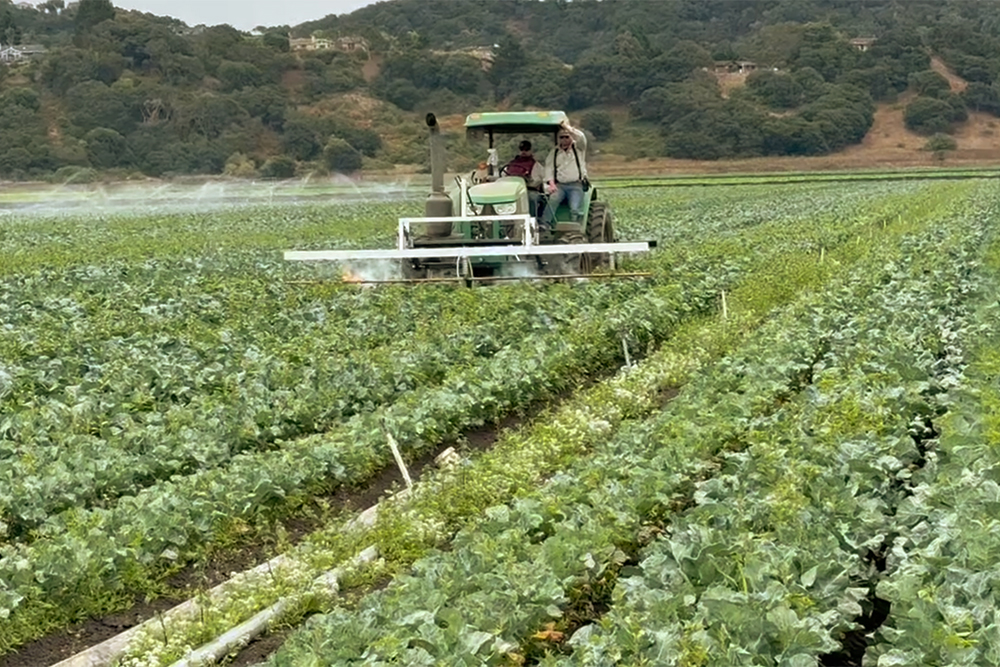
Systems like LASCO’s Lightning Weeder™ use an Electric Discharge System (EDS) to deliver controlled electrical energy directly through the plant. This process disrupts the weed from root to shoot, providing effective control without relying on herbicides.
Because the system targets the plant through physical interaction rather than chemical application, it offers a different way to approach resistant weeds—especially in situations where traditional programs are losing effectiveness.
Managing Late-Season and Resistant Weed Escapes
One of the most common challenges growers face is managing weeds that emerge after the final spray application. These late-season escapes can compete with crops, impact harvest efficiency, and contribute to future weed pressure.
Farmers across multiple regions are increasingly using electric weed control in these situations, where it can serve as a reliable follow-up tool to prevent weeds from taking over when chemical options are limited or less effective.
This ability to respond late in the season—without adding another herbicide application—can play an important role in managing both costs and long-term weed pressure.
Reducing Dependence Without Sacrificing Performance
As part of an integrated weed management approach, electric weed control allows growers to diversify how they manage weeds across the season.
Rather than increasing chemical use, it provides an additional layer of control that can help:
- Reduce reliance on herbicides over time
- Simplify weed management programs
- Maintain consistent performance under changing conditions
At the same time, the targeted nature of the technology helps preserve soil structure and minimize unnecessary inputs, supporting long-term productivity.
Built with Farmers, for Real-World Conditions
Innovation at LASCO begins in the field, working alongside farmers who understand the realities of timing, cost, and risk.
The Lightning Weeder™ was developed with durability, simplicity, and performance in mind—designed to operate within existing farming systems without adding unnecessary complexity. Its effectiveness across row crops and diverse farming environments reflects a broader need for tools that can deliver results under real-world conditions.
A Shift in How Farmers Approach Weed Control
Across the industry, electric weed control is moving beyond early-stage adoption. What was once considered an alternative is now being recognized as a practical solution—particularly as resistance increases and the cost of chemical programs continues to rise.
Farmers are increasingly looking for tools that:
- Deliver consistent results
- Help manage costs more effectively
- Fit into existing operations without disruption
Looking Ahead
As the season approaches, the focus is not only on controlling weeds—but on doing so in a way that is both effective and economically sustainable.
With herbicide resistance continuing to expand and input costs remaining unpredictable, many growers are rethinking how weed control fits into the bigger picture of farm management.
Electric weed control represents one of the tools helping drive that shift—offering a way to manage resistant weeds, reduce input pressure, and maintain control when it matters most.