
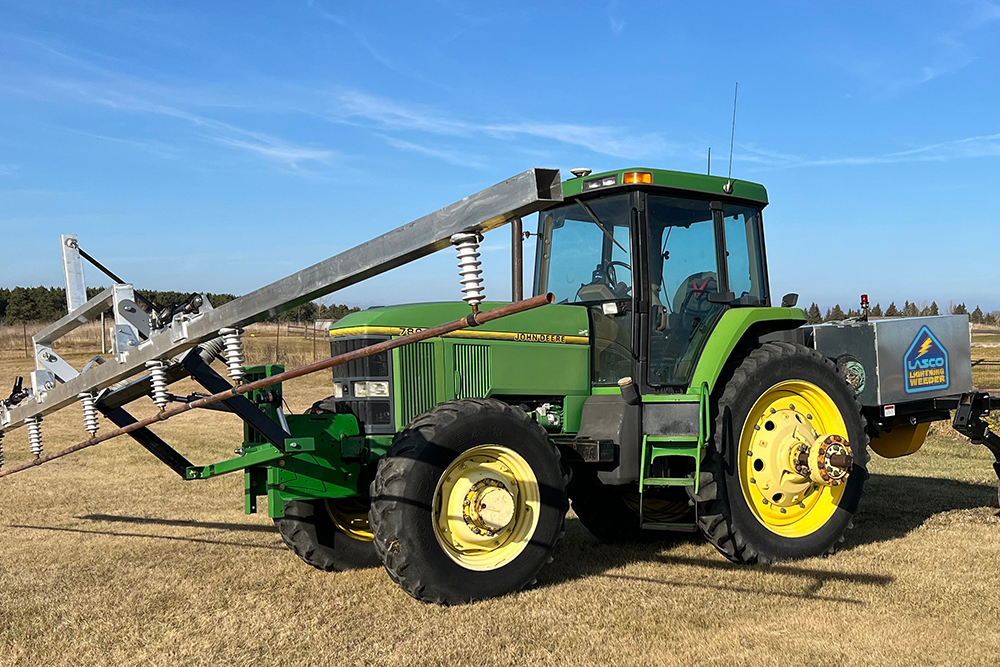
Across U.S. agriculture, herbicide-resistant weeds continue to challenge even the most carefully planned crop management programs. Growers are increasingly looking for practical tools that can complement chemical strategies while improving long-term weed control. One emerging approach attracting attention is electric weed control, a technology that destroys weeds by applying electrical energy directly to plant tissue rather than relying on herbicides.
Unlike smaller electric systems designed primarily for specialty crops, newer farm-scale equipment is being developed to integrate with standard tractors and operate within traditional row-crop farming systems. This allows growers to incorporate electric weed control into existing field operations while maintaining the scale and efficiency required for modern agriculture.
Row crops—such as potatoes, lettuce, beets, peanuts, tomatoes, and broccoli—are planted in organized rows to support efficient cultivation, irrigation, and harvesting. Because these crops are grown at scale across many regions, having weed control tools that fit seamlessly into row-based systems is especially important for growers.
A Practical Question from the Field
As interest in electric weed control grows, many farmers are asking a practical question:
how does the technology target weeds without damaging the crop?
The answer lies in how the system operates in the field.
Systems like LASCO’s Lightning Weeder™ rely on direct contact and controlled positioning, allowing growers to treat weeds between rows or above the crop canopy without impacting the crop itself. Unlike herbicides, which rely on chemical selectivity, electric weed control depends on precision—where and how the equipment is applied.
In structured row-crop systems, this precision becomes a practical advantage, not a limitation. With clearly defined planting patterns, growers can guide equipment to target weeds where they grow most aggressively—between rows or above the crop—while avoiding direct contact with the crop itself.
How Electric Weed Control Works
Electric weed control works by delivering controlled electrical energy through the plant structure. When the electrical current passes through the weed, it disrupts cellular structure and damages the plant internally, often reaching the root system. Because the process relies on physical energy rather than chemical application, it offers growers an additional tool for managing weeds that have developed resistance to commonly used herbicides.
Interest in alternative weed management approaches has grown steadily as resistant weed populations continue to expand across many crop regions. In addition to resistance concerns, growers are also evaluating long-term soil health, regulatory pressures, and the need for diversified weed control strategies within integrated weed management programs.
Designed for Real-World Farming
One example of this approach is LASCO’s Lightning Weeder™, a tractor-mounted system designed to apply electrical energy to weeds during field operations. The equipment connects to standard farm tractors in the 50–250 horsepower range, allowing the technology to be used within the scale and workflow of typical row-crop farming operations.
By integrating electric weed control into traditional field equipment, growers can potentially treat weeds during normal passes across the field. This compatibility with existing equipment is an important factor for many producers evaluating emerging technologies, as it allows them to explore new weed management methods without dramatically altering established farming practices.
A Complementary Tool, Not a Replacement
Electric weed control is not intended to replace all other weed management strategies. Instead, many experts see it as a complementary tool within a broader integrated weed management approach. Combining mechanical, cultural, chemical, and emerging technologies can help reduce reliance on any single method and improve long-term weed control outcomes.
This distinction is important. Electric weed control introduces a new layer of control—one based on physical interaction, timing, and equipment setup. For many growers, this opens the door to reducing reliance on herbicides while maintaining operational efficiency.
A Shift Toward Precision in Modern Agriculture
Another factor driving interest in this technology is agriculture’s broader trend toward electrification and alternative power systems. Electric motors, sensors, and precision control systems are increasingly appearing in agricultural equipment, opening the door for new approaches to field operations that rely less on chemical inputs and more on physical or electrical processes.
For growers facing increasingly complex weed management challenges, technologies such as electric weed control represent an additional option worth evaluating. As equipment manufacturers continue refining these systems and more field data becomes available, farm-scale electric weed management may become an increasingly visible part of modern row-crop agriculture.
While still an emerging category, the development of tractor-integrated electric weed control systems reflects a larger shift—one where precision, adaptability, and practical field application are becoming just as important as chemistry in the future of weed management.
LASCO currently offers free setup and delivery on Lightning Weeder™ systems through June 15, helping growers explore electric weed control with minimal disruption to their operations.