
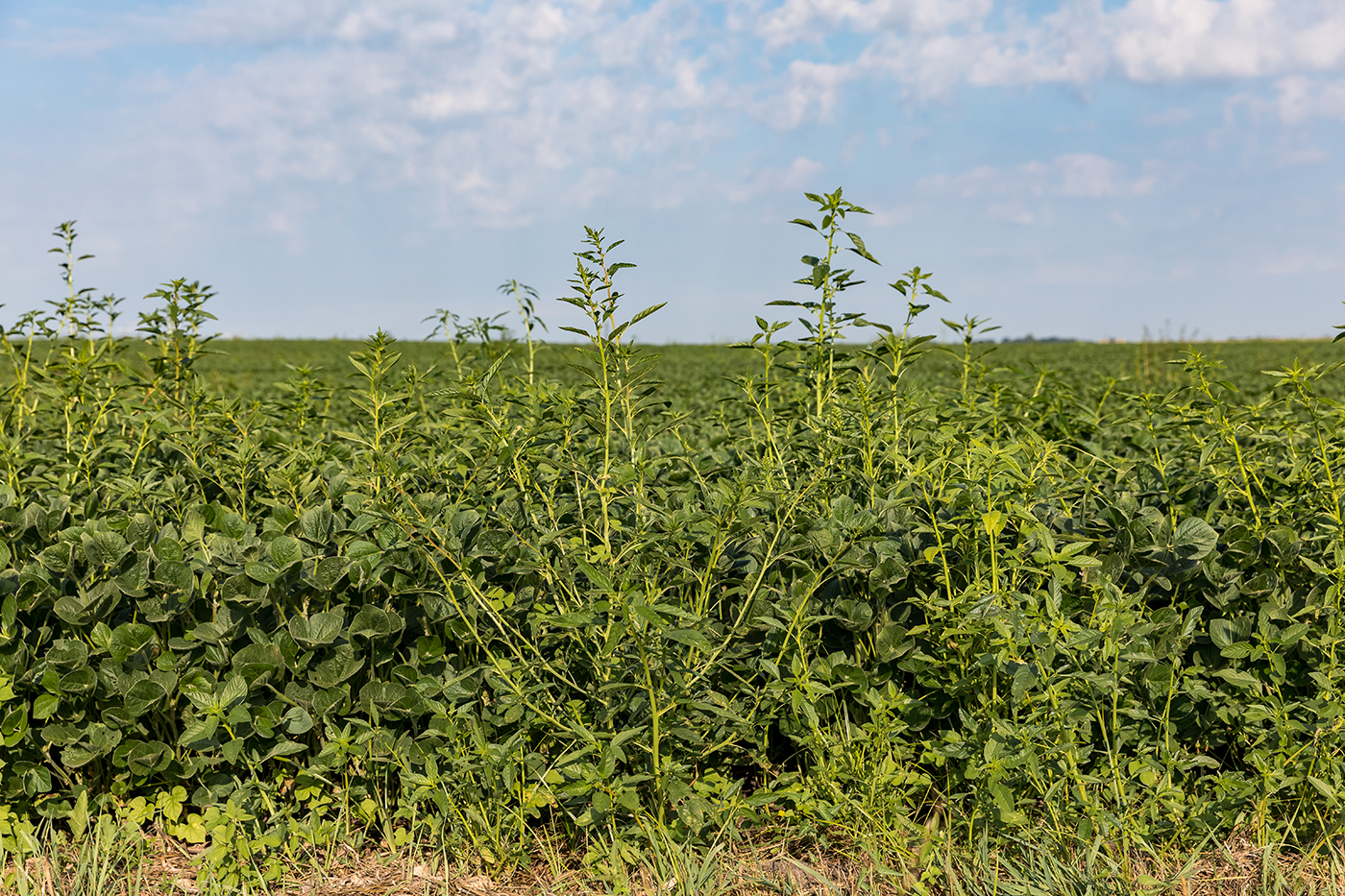
Late-season weed escapes can reveal where herbicide resistance is gaining ground—and where electric weed control may fit.
Harvest tells a story.
It shows how the crop performed, where weather created challenges and, if you look closely, which weeds made it through the season.
For growers dealing with waterhemp and other herbicide-resistant weeds, those surviving plants can provide valuable information when planning next year’s weed-management program.
That lesson became even more important in 2026. University of Minnesota Extension confirmed Minnesota’s first case of glufosinate-resistant waterhemp this year, adding another challenge to an already difficult weed. Extension also encouraged growers approaching harvest to scout for waterhemp and other late-season escapes before surviving plants could produce seed and contribute to future weed pressure.¹ ²
What Survived—and Why Does It Matter?
A field that looks relatively clean at harvest can still contain clues about where a weed-management program needs additional support.
Waterhemp is particularly important to watch. University of Minnesota Extension identified it in 2026 as a leading glyphosate-resistance challenge in sugar beet production, along with ragweed and kochia.³
An escape this year can become more than this year’s problem if the plant is allowed to produce seed.
That is why the period around harvest is a good time to look back across individual fields. Where did weeds escape? Which species survived? Were they scattered or concentrated in particular areas? Did they extend above the crop canopy?
Those observations can help determine what needs to change before the 2027 season begins.
Where Electric Weed Control Fits
No single weed-control method is likely to solve every resistance problem.
An integrated approach gives growers multiple ways to address weeds throughout the season. North Dakota State University’s 2026 Sugarbeet Production Guide includes electrical weed control among the options for managing glyphosate-resistant waterhemp, specifically when weeds extend above the sugar beet canopy.⁴
The LASCO Lightning Weeder™ is designed for that role.
Its patented Electric Discharge System (EDS) makes direct contact with weeds and delivers electrical energy through the plant, rapidly heating cellular fluids and damaging plant tissue. Because the process does not depend on a chemical active ingredient, it gives growers another option when herbicide-resistant weeds survive earlier control efforts.
Electric weed control isn’t intended to replace everything else a grower is doing. It adds another tool to the program.
What LASCO Saw in the Field in 2026
This season provided considerably more real-world experience with the technology.
According to LASCO Founder and CEO Kevin Olson, several thousand acres across the valley were treated with Lightning Weeders through rental machines and custom applicators.
“One grower told us that after treating his fields with the Lightning Weeder, waterhemp was no longer a problem,” Olson said.
The season revealed something else: demand.
Some acres went untreated because demand for rental machines and custom applicators exceeded available capacity.
For growers who encountered resistant weeds this year, that makes planning ahead particularly important. Farmers interested in using electric weed control in 2027 can consider purchasing a Lightning Weeder, reserving a rental machine or arranging for a custom applicator.
Let This Year’s Fields Help Plan Next Year’s Strategy
Before the details of the season fade, take another look at what happened in your fields.
Which weeds survived? Where were the worst escapes? Which parts of the existing program worked well, and where might another approach help?
Those answers can become the starting point for a more diversified weed-management strategy in 2027.
As Olson puts it, “The time to think about next year’s resistant weeds is while you can still see what happened this year.”
Learn more about the LASCO Lightning Weeder, rental availability and custom application options at Lightning Weeder.
Sources
¹ University of Minnesota Extension — Glufosinate-Resistant Waterhemp Confirmed in Minnesota, March 2026.
² University of Minnesota Extension — Preharvest Weed Control: Scout Fields and Field Edges Now to Prevent Weed Seed Production, August 2026.
³ University of Minnesota Extension — Strategic Farming Field Notes: Sugar Beets and Disease Management, June 2026.
⁴ North Dakota State University — 2026 Sugarbeet Production Guide.