
Modern agriculture is entering a new era of weed management.
As national conversations surrounding glyphosate-based herbicides continue intensifying, growers across the country are increasingly rethinking how weed control fits into the future of sustainable farming. Rising concerns surrounding herbicide resistance, soil health, regulatory pressure, and evolving consumer expectations are pushing the agriculture industry toward more diversified and precision-based approaches that balance productivity with long-term land stewardship.
One of the biggest challenges farmers face today is the growing rise of herbicide-resistant “superweeds.” Across the United States, resistant weed populations continue creating significant operational and financial strain for growers, while public scrutiny surrounding pesticide residues in food and soil continues to increase. Even some of the world’s largest agricultural companies are now investing heavily in alternative weed management technologies as the industry searches for new long-term solutions.
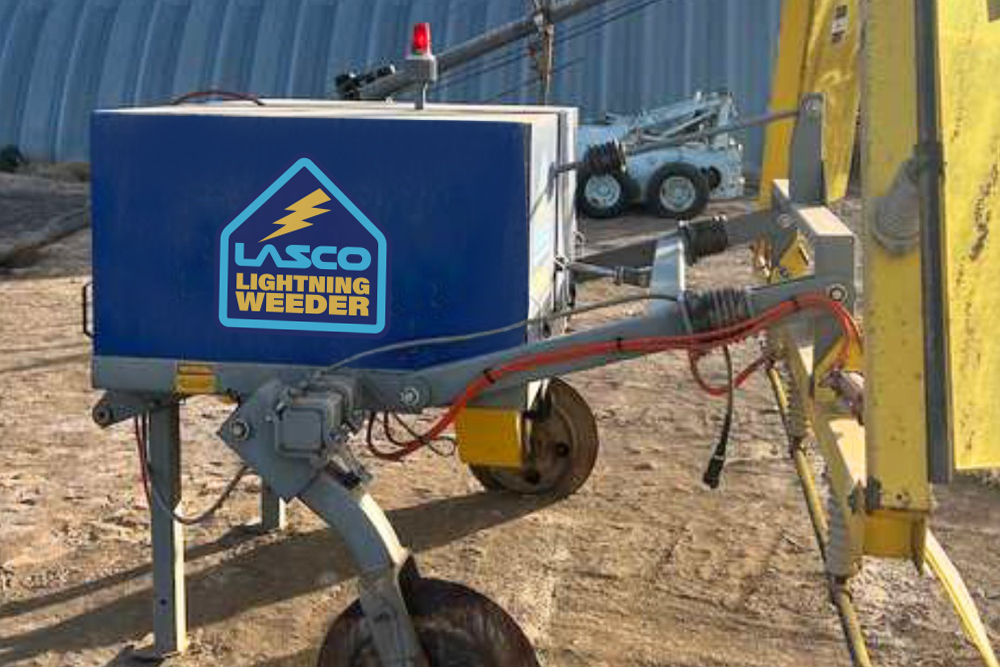
In response to this evolving landscape, LASCO Manufacturing is helping bring attention to a different approach through its Lightning Weeder™ — an electric weed control system designed to support integrated weed management while reducing dependence on chemical-only practices.
How Electric Weed Control Works
Unlike traditional herbicide applications, the Lightning Weeder™ uses a patented Electric Discharge System (EDS) that controls weeds through direct plant contact.
When weeds touch the applicator bar, electrical energy rapidly evaporates moisture within the plant itself, disrupting growth without applying chemicals directly to the field. Because the electrical current travels through the weed rather than the soil, the process leaves no chemical residue behind while minimizing disruption to microbial activity beneath the surface.
For many growers, the appeal of electric weed control extends beyond simply reducing chemical use. The technology also supports efforts to preserve soil structure, minimize soil disturbance, and promote long-term field productivity.
Supporting the Shift Toward Precision Agriculture
As precision agriculture continues evolving, technologies that help farmers expand weed management strategies while protecting soil vitality are attracting growing industry attention.
“Farmers today are under pressure from every direction — rising input costs, herbicide resistance, regulatory scrutiny, and changing consumer expectations,” said Kevin Olson of LASCO Manufacturing. “The Lightning Weeder™ gives growers another tool to help manage weeds while reducing dependence on traditional chemical-only approaches.”
Designed for modern agricultural operations, the Lightning Weeder™ combines hydraulically controlled precision height adjustment with operator-managed electrical output, allowing growers to adapt applications based on varying field conditions. LASCO has also engineered the system with multiple built-in safety protections, including interlock systems and shielded components designed to support safe field operation.
A Broader Industry Conversation
As agriculture moves toward more diversified and precision-based farming models, electric weed control is becoming part of a larger industry conversation surrounding sustainable land management and integrated weed management strategies.
While chemical herbicides will likely continue playing an important role in farming, many growers are now exploring how technologies like electric weed control can complement existing practices and help create more resilient agricultural systems for the future.
The conversation around weed management is clearly evolving — and innovations like the Lightning Weeder™ are helping shape what the next generation of agriculture may look like.